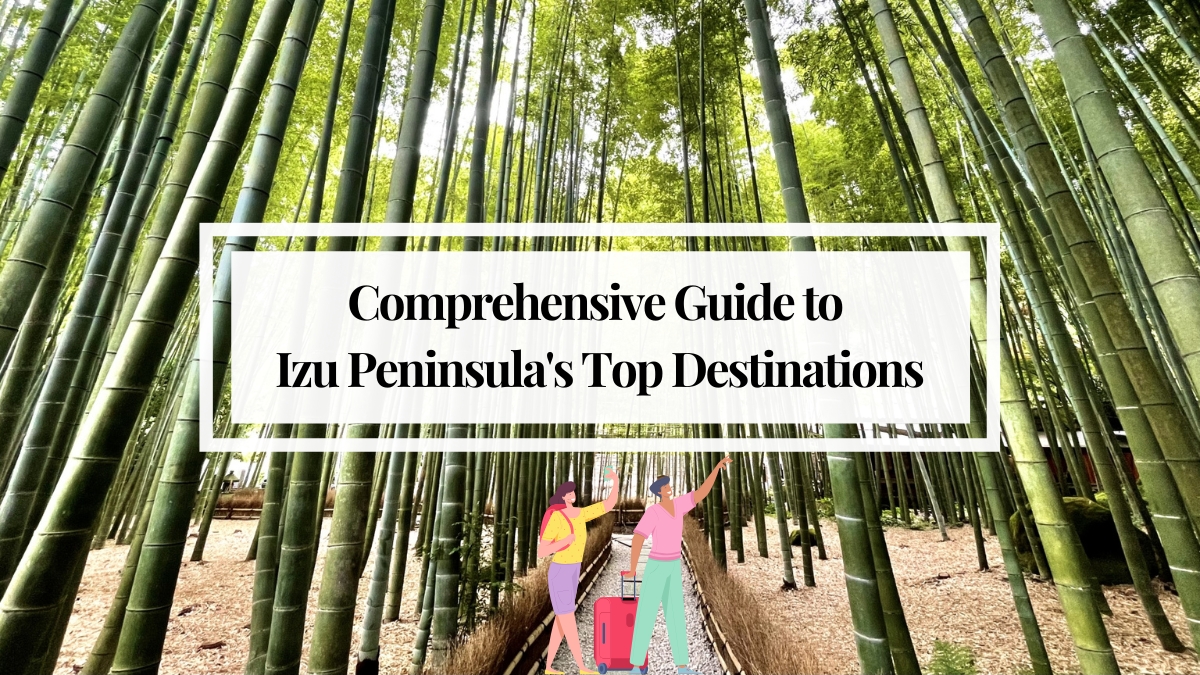
The Izu Peninsula offers an incredible diversity of experiences, from ancient hot spring villages to dramatic volcanic coastlines. Here is comprehensive information on the most popular locations recommended for international tourists.
1.Shuzenji Onsen (修善寺温泉): Little Kyoto of Izu

| Feature | Detail |
| Location | Middle Izu Peninsula |
| Atmosphere | Tranquil, historical, and deeply cultural. |
| Best For | Relaxation, history buffs, and enjoying traditional Japanese aesthetics. |
Core Historical Sites
- Shuzenji Temple (修禅寺): This ancient temple is said to have been founded in the year 807 by the renowned monk Kobo Daishi. It transitioned from the Rinzai to the Soto Zen school in the late 15th century. It holds profound historical connections:
- It is the site where the second Kamakura Shogun, Minamoto no Yoriie, was tragically confined and met his death, an event popularized by the historical play, Shuzenji Monogatari (The Tale of Shuzenji).
- The Treasure Hall (瑞宝蔵), open from 8:30 AM to 4:00 PM (until 4:30 PM from April to September), displays relics related to Yoriie and ancient texts donated by his mother, Hojo Masako.
- Seasonal Events include the Setsubun-e (Feb), Hana Matsuri (Flower Festival) and Yukumi-shiki (Hot Spring Water scooping Ceremony) (Apr), and the Yoriie Festival (Jul).
- The Temizuya (purification basin) features hot spring water flowing from a dragon’s mouth.
- Dokko-no-Yu (独鈷の湯): Considered the birthplace of Shuzenji Onsen. Legend states Kobo Daishi struck a rock with his Dokko-sho (a Buddhist ritual implement) to draw forth the medicinal hot spring when he saw a boy washing his ill father in the cold river.
- Important Note: The facility is not a legally designated public bath and is not available for bathing or foot-bathing (ashiyu).
- Hie Shrine (日枝神社): Located next to Shuzenji Temple, this serene shrine is known for its magnificent old trees, including large Maki, Keyaki, and Sugi trees that line the approach.
- It is home to the “Child-Bearing Cedar (子宝の杉)”, an 800-year-old twin cedar tree designated a Prefectural Natural Monument. Passing between the two trunks is believed to grant blessings for conception.
- Shigetsuden (指月殿): Built by Hojo Masako to pray for the soul of her deceased son, Minamoto no Yoriie. It is considered the oldest wooden building in Izu and features a rare statue of Shaka Nyorai holding a lotus flower.
- Graves of the Minamoto Clan: Within the Shigetsuden grounds are the graves of Minamoto no Yoriie and his uncle, Minamoto no Noriyori (who was also tragically exiled and killed here), as well as the Thirteen Retainers (十三士の墓) who were executed for plotting revenge after Yoriie’s assassination.
Scenery and Promenade
- Bamboo Forest Path (竹林の小径): A picturesque walking path along the Katsura River, running through the heart of the onsen town. It features a large, circular bamboo bench where visitors can relax.
- It was awarded the Urban Landscape Grand Prize in 1997.
- The path is lit up after sunset, making for a romantic evening stroll.
- Shuzenji Corridor (しゅぜんじ回廊): A traditional Japanese-style gallery located along the Bamboo Forest Path that hosts photo exhibitions and seasonal displays related to Shuzenji.
- Akagaeru Park (赤蛙公園): This small park is the setting for the short story “Akagaeru” (Red Frog) by author Shinsaku Shimaki.
- It hosts the “Hotaru no Yube” (Firefly Evening) event from late May to early June, where visitors can enjoy the magical glow of fireflies.
- Cherry blossoms bloom here from late March to early April.
- Five Bridges of Love (恋の橋めぐり): Five distinct bridges crossing the Katsura River, each said to bring a specific romantic blessing to couples who cross them while making a wish.
Local Theme Parks and Experiences
These attractions are located near the Shuzenji Onsen area but require separate transportation.
- Shuzenji Nijino Sato (修善寺 虹の郷): A large theme park divided into various zones:
- British Village (History & Culture), Canadian Village (Kaleidoscope Museum), Fairy Garden (Seasonal Flowers), Japanese Garden (Irises & Rhododendrons), and Takumi Village (Traditional Crafts).
- The park features a 15-inch gauge Steam Locomotive (SL) and is suitable for all ages.
- Cycle Sports Center (サイクルスポーツセンター): A facility dedicated to cycling and outdoor recreation:
- Features a dedicated 5 km Circuit for road racers and a wide variety of “Funny Bikes” for casual fun.
- Also offers a large natural grass Putter Golf Course with views of Mt. Fuji and a multi-purpose hall for sports like Futsal (reservation required).
- Izu Peninsula Geopark Museum “Georia”: An excellent museum dedicated to the Izu Peninsula Geopark, explaining the dynamic geological history of the region and how it has changed over the past 4.6 billion years through plate tectonics and volcanic activity.
2.Atami (熱海): The Vibrant Coastal Gateway

| Feature | Detail |
| Location | Northeastern Izu Peninsula (Closest major Izu city to Tokyo) |
| Atmosphere | Lively, resort-like, blending luxury, history, and seaside fun. |
| Best For | Easy access, grand relaxation, cultural visits, and year-round coastal activities. |
Onsen and Relaxation
Atami is one of Japan’s leading hot spring resorts, boasting over 500 active thermal sources. The name “Atami” originates from the term “Atsu-umi” (Hot Sea), due to the intense hot springs that once dramatically gushed into the sea. The spring water is known for its smooth texture and skin-beautifying effects.
- Ieyasu-no-Yu Footbath (家康の湯): Located right outside Atami Station, this free, continually flowing ashiyu (footbath) was established in 2004 to commemorate the 400th anniversary of Shogun Tokugawa Ieyasu’s visit. Ieyasu famously loved Atami’s waters. It is said to be effective for neuralgia, muscle pain, and poor circulation.
Nature, Parks, and Coastal Fun
- Atami Sun Beach (熱海サンビーチ): A man-made beach in the city center with white sand and gentle waves, popular in the summer for swimming. At night, the beach is beautifully lit up, creating a fantastic atmosphere for an evening stroll.
- Marine Water Park: In summer, a large inflatable marine obstacle course is available for visitors.
- Shinsui Park & Moon Terrace (親水公園・ムーンテラス): This seaside park is ideal for relaxation and walks. The Moon Terrace is famous as a “Lovers’ Sanctuary” and offers a spectacular night view, especially under a full moon.
- Hatsushima Island (初島): A resort island just a 30-minute high-speed ferry ride from Atami Port. It’s perfect for a day trip or an overnight stay focused on nature and relaxation.
- Activities: Enjoy seafood at the fisherman-operated dining area, glamping and outdoor activities at PICA Hatsushima, and the “Sea Pool” in summer.
- ACAO FOREST (アカオフォレスト): A large LAND ART PARK situated on a hillside overlooking the ocean, comprising 13 themed gardens.
- Scenery: Offers breathtaking views of the “Atami Blue” ocean and sky, with seasonal displays of roses, bulbs, herbs, and perennial flowers.
- Features: Includes COEDA HOUSE, a café designed by renowned architect Kengo Kuma, the Soga Asama Shrine, and popular workshops for blending custom herbs and aromas.
Gardens and Seasonal Events
- Atami Bai-en (熱海梅園 – Plum Garden): Famous for hosting both Japan’s earliest blooming plums (60 varieties, 469 trees, some over 100 years old) and its latest autumn leaves (about 380 maples).
- Seasonal Festivals: The Plum Festival runs from early January to early March, and the Maple Festival runs from mid-November to early December.
Culture and History
- MOA Museum of Art (MOA美術館): Houses approximately 3,500 works, including the famous National Treasure, Ogata Korin’s Red and White Plum Blossoms screens.
- Architecture: The interior blends traditional Japanese materials like plaster and Yakusugi cedar with modern technology, enhancing the display of art. The building is known for its massive escalator system and a mesmerizing kaleidoscope in its circular hall, often featured in media.
- Kinomiya Shrine (來宮神社): A powerful spiritual site known for the Ōkusu, a majestic camphor tree over 2,100 years old. It is believed that walking once around its massive trunk adds a year to your lifespan.
- Benefits: Said to bring luck in health, longevity, and marriage. The tree is beautifully lit up at night.
- Izusan Shrine (伊豆山神社): Considered the birthplace of the name “Izu,” this shrine is famed as the spot where Minamoto no Yoritomo and Hojo Masako were united, making it a popular shrine for matchmaking and marriage. Tokugawa Ieyasu also visited the shrine.
Shopping and Local Charm
- Atami Station Shopping Streets (仲見世・平和通り): Located right outside the station, these arcades are bustling spots for shopping and trying local cuisine.
- Souvenirs: Visitors can find fresh seafood, local sweets like onsen manju, and popular new dessert shops.
- Atmosphere: While modern, the side streets and adjacent Atami Ginza Shopping Street offer a nostalgic, retro Showa-era (mid-20th century) atmosphere, featuring old-fashioned cafés and new specialty stores.
3.Mount Ōmuro (大室山): The Iconic Volcano
| Feature | Detail |
| Location | Near Izu Kogen (East Izu) |
| Geology | Extinct Scoria Cone volcano. |
| Best For | Panoramic views, geology enthusiasts, and unique cultural experiences. |
Mount Ōmuro is the unmistakable symbol of both Ito City and the Izu Kogen area. Formed approximately 4,000 years ago, it is a spectacular example of a scoria cone volcano. Its massive, symmetrical, bowl-like shape—often compared to an inverted pudding—is a purely natural geological formation, measuring 1,000 meters across the base and rising 300 meters high.
The eruption of Mount Ōmuro dramatically sculpted the surrounding land:
- Birth of Izu Kogen: Massive lava flows erupted from the northeast and south sides of the base, filling in valleys and uneven terrain. This process created the gentle, sloping plateau that is now known as the beautiful Izu Kogen (伊豆高原) area.
- Creation of Jogasaki Coast: The largest lava flow traveled southeast for about 4 kilometers, pushing into and reclaiming land from the sea. This volcanic activity is directly responsible for the formation of the rugged Jogasaki Coast (城ヶ崎海岸) and its dramatic cliffs.
- Volcanic Ash: The eruption also ejected huge amounts of volcanic ash, which blanketed wide areas of the Izu Peninsula. This ash can still be seen today as distinctive black layers in cliffs and construction sites throughout Ito City.
Visitor Experience
- Chairlift Ride: The only way to the top is via a single-person chairlift.
- Crater Walk (噴火口お鉢めぐり): A 1 km path around the perimeter of the crater offering 360-degree panoramic views, often including Mount Fuji.
- Cultural Tradition: The smooth, grass-covered shape is traditionally maintained by the annual Yamayaki a controlled burning ritual performed in the early spring.
The chairlift will be closed for maintenance from Monday, December 8, 2025, to Friday, December 19, 2025.
4.Jogasaki Coast (城ヶ崎海岸) & Kadowaki Suspension Bridge (門脇吊橋)

| Feature | Detail |
| Location | East Izu (formed by Mount Ōmuro’s eruption) |
| Geology | Dramatic cliffs formed by 4,000-year-old lava flows. |
| Best For | Thrilling views, scenic hiking, and geological exploration. |
The Coastline and Trails
The Jogasaki Coast is a rugged, dramatic coastline stretching approximately 9 kilometers, created by the lava flows that erupted from Mount Ōmuro about 4,000 years ago. Visitors are highly recommended to explore the coast along the Picnical Course and Nature Study Trail (ピクニカルコースと自然研究路).
Beyond the dramatic geological features, the coastline offers beautiful seasonal flora:
- Summer (June/July): Enjoy the vibrant colors of Hydrangeas, Daylilies, and Gold-banded Lilies.
- Autumn: Look for the charming yellow blooms of Iso-giku and Tsuwabuki.
Kadowaki Suspension Bridge (門脇吊橋)
The absolute must-see highlight of the Jogasaki Coast is the Kadowaki Suspension Bridge. This bridge, suspended between towering cliffs, is an exhilarating vantage point:
- Scale: It spans 48 meters in length and hangs approximately 23 meters (roughly the height of a seven-story building) above the raging Pacific Ocean.
- The Experience: Crossing the bridge offers a thrilling experience as you hear and see the powerful waves crashing against the cliffs below. The perspective provides a breathtaking, 360-degree panorama of the Pacific.
Kadowaki Lighthouse (門脇埼灯台)
Near the suspension bridge, the observation deck of the Kadowaki Lighthouse allows visitors to enjoy an even broader, expansive view. From this 360-degree lookout, you can clearly see the Izu Seven Islands (伊豆七島) stretching out across the horizon, as well as the Amagi Mountain Range inland.
5.Dogashima Coast (堂ヶ島海岸): A Multi-Island Seascape

| Feature | Detail |
| Location | Central West Izu Peninsula (along a 2 km stretch) |
| Geology | Islands composed of white andesitic tuff (volcanic rock), showing distinctive geological patterns. |
| Best For | Boat tours, sunset viewing, unique tidal phenomenon, and geological observation. |
The Seascape and Geology
Dogashima is famous for its picturesque seascape, which resembles the renowned Matsushima, featuring numerous small and large wave-eroded islands. These islands are made of uplifted and subsided volcanic material and feature fine striped patterns known as Cross-Bedding, created by wave and current erosion.
- Geological Wonders: Visitors can observe stunning geological formations, such as the layered patterns in the rocks, or Columnar Jointsat Sanshirō Island, revealing the area’s violent volcanic past.
- Specific islands like Kameshima (亀島 – Turtle Island) and Hebishima (蛇島 – Snake Island) show unique layers and formations created by ancient submarine landslides and deformed volcanic ash layers, respectively.
Key Attractions
- Tensōdō Cave (天窓洞) – The Sea Cave Highlight:
This large sea cave is Dogashima’s principal attraction. It was carved out of fine-grained white andesitic tuff, with a central section of the ceiling that has collapsed, forming a natural skylight.
The highlight is the mesmerizing sight of sunlight streaming through the skylight, causing the water’s color to change fantastically depending on the season, time, and weather. Famous poets Yosano Tekkan and Akiko visited in 1935 and wrote poems about the mysterious light of the cave.- Access: You can enter the cave via a sightseeing boat and view it from above by following the Dogashima walking trail.
- Tombolo Land Bridge & Sanshirō Island (三四郎島):
Located off the northern Sehama Coast , Sanshirō Island is actually a group of four small islands (Denbei-jima, Naka-no-shima, Okinose-jima, Taka-shima). During low tide, the first island (Denbei-jima) connects to the mainland via a sandbar known as a Tombolo.- Experience: When the tide is low, visitors can walk across the Tombolo to the island without getting their feet wet (confirming tidal times beforehand is essential).
Boat Tours and Viewing
- Sightseeing Cruises: Boat tours depart from the Dogashima pier (overlooking Kameshima) and offer the best way to explore the area.
- Cave Tour: Specifically visits the Tensōdō Cave.
- Geosite Cruise: Focuses on observing the unique coastal geology and rock formations.
- Sunset View: One of the most beautiful times to visit is at sunset, when the sun dips below the horizon, framed by the beautiful multi-island seascape.
6.Shirahama Coast (白浜海岸)
| Feature | Detail |
| Location | Southern Izu Peninsula (near Shimoda) |
| Coastline | Three distinct beach areas offering swimming, relaxing, and tide pooling. |
| Best For | Swimming, sunbathing, family fun, and coastal photography. |
The “Shirahama” area is not just one beach, but three distinct coastlines, each offering a unique experience:
- Shirahama Ōhama Beach (白浜大浜海水浴場): The largest and most open beach in the Izu Peninsula, stretching approximately 800 meters from north to south. Its expansive, open sands make it the main destination for summer crowds seeking a lively atmosphere.
- Shirahama Chūō Beach (白浜中央海水浴場): Recognized by the Ministry of the Environment as one of “Japan’s 88 Best Bathing Beaches” and one of the “100 Best Waterside Beaches.” This spot is characterized by its signature sparkling white sand and clearer, azure waters, offering a classic tropical beach feel.
- Shirahama Itado Coast (白浜板戸海岸 – also known as Isshiki Coast): This area is primarily known for rock pooling/tide pooling, offering a more natural, rocky environment perfect for families and children to explore small marine life when the tide is out.
Shirahama Shrine (白濱神社)
This shrine is centrally located between Shirahama Ōhama and Shirahama Chūō beaches. It is historically significant as the oldest shrine on the Izu Peninsula, with a history spanning over 2,400 years.
- Deities: The main deity is Ikona-hime no Mikoto , revered as the god of matchmaking and fertility. The shrine also enshrines Mishima Ōkami the god of commerce and fishing.
- Iconic Torii: The shrine is famous for its picturesque red torii gate perched on a rock that overlooks the ocean, making it an essential photo spot on the coast.
7.Mishima Sky Walk (三島スカイウォーク)
- Overview: Located near the northern gateway to Izu (Mishima Station), this is a relatively new attraction that has quickly become popular for its views.
- Key Attractions:
- Japan’s Longest Pedestrian-Only Suspension Bridge: It spans 400 meters.
- Spectacular Mount Fuji View: Offers an incredible, unobstructed view of Mount Fuji towering over Suruga Bay.
- Long Zip Slide: An exhilarating activity zone located near the bridge.
- Atmosphere: Thrilling, modern, and provides world-class views of Japan’s most famous peak.